
Digital Accessibility and Braille in Japan: Reflections from Katherine Baker
Did you know that Braille isn’t the same everywhere? It actually exists in different languages, adapted to how each language works. Japan has its own Braille system, built around kana syllables rather than the Roman alphabet. It is one of those things not many people think about, but once you see it, it completely changes how you think about accessibility.
On this trip, that idea really came to life.
As someone who works in digital accessibility, you tend to notice things when you’re out in the world. You notice where accessibility is missing, where it feels clunky, and where it has clearly been added as an afterthought. Japan stood out immediately for the opposite reason. 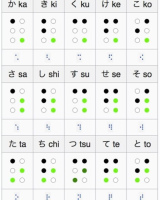 Accessibility there didn’t feel like effort or compliance. It just worked. From physical spaces through to digital tools like Google Maps and Google Translate, everything was accurate, reliable, and easy to use. Nothing felt like a barrier or a workaround.
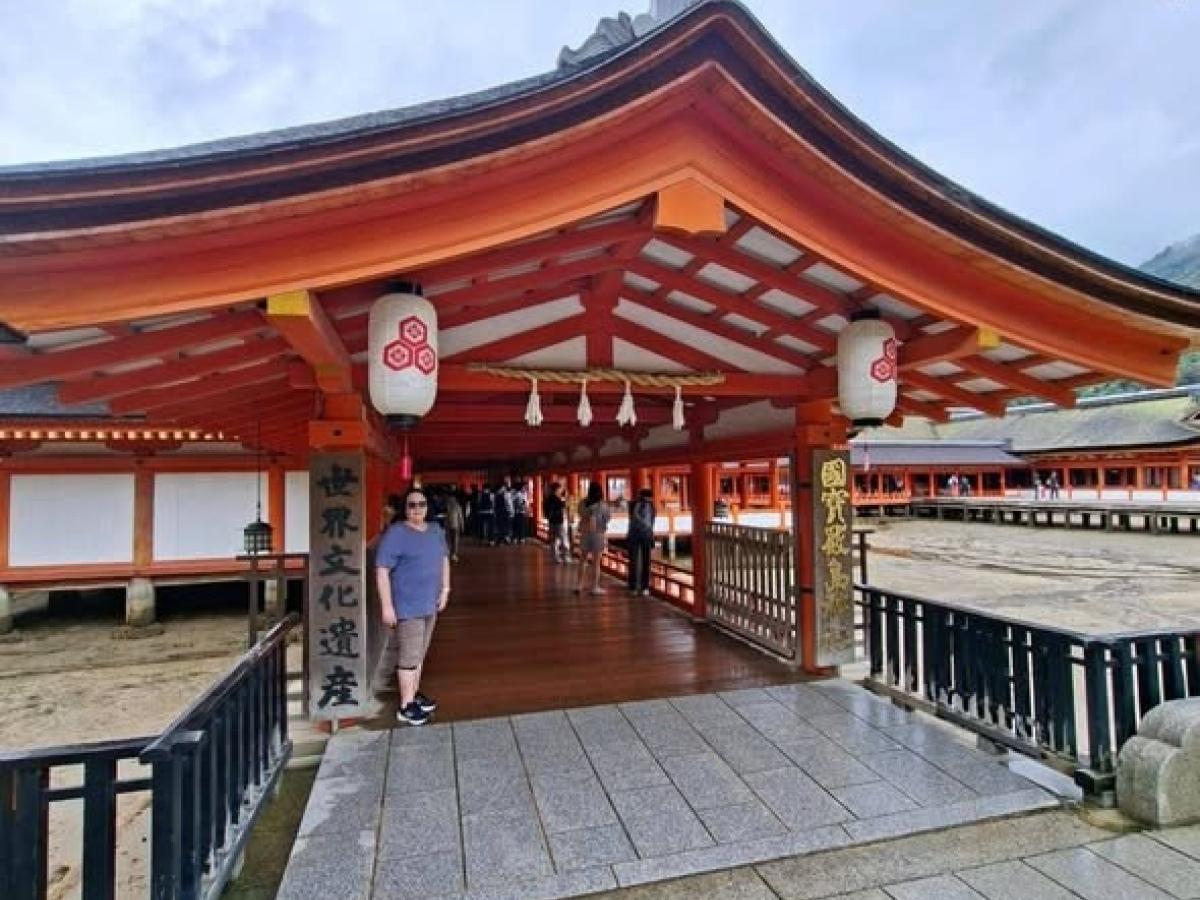
At the end of May, my husband and I spent two weeks in Japan, a place I had always wanted to visit. It was an incredible experience, with a striking balance between the very old and the new. We explored temples, walked through bamboo forests, and made the most of public transport. The temples were often busy but still felt peaceful because of their age and surroundings. The forests, by contrast, were quiet and grounding. Even with crowds, there was a sense of calm that made many places feel truly special.
One of the things that stood out was how quickly we, or rather Gavin, adapted to the transport system. At first, the train stations felt overwhelming with their pace and noise, but once we understood the rhythm, everything made sense. Public transport was efficient, well organised, and easy to use.
Because I work in accessibility, I naturally started to notice details others might miss. Braille was one of them. It appeared in so many places, including at the end of handrails, on signage, and throughout train stations and public areas. It was not hidden or treated as an extra. It was simply there, part of the experience.
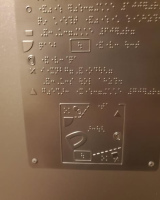 A standout moment was on the shinkansen, the bullet train between Tokyo and Kyoto. In the restroom, there was a raised map on the back of the door with Braille and tactile symbols. It clearly explained the layout of the space, showing where the toilet, basin, and other features were positioned. Someone could understand the entire room just by touch. It was practical, thoughtful, and just made sense.
Tactile paving was another feature that was impossible to miss. It was everywhere and often paired with yellow safety lines. These guided people through stations and along platforms, helping them stay a safe distance from edges. People actually used it too. It was part of the flow of movement, not something ignored.
Accessibility extended beyond visual design. We saw strong support for people with mobility needs as well. At train stations, staff quickly brought out ramps for wheelchair users boarding or exiting trains. Elevators were easy to find. On buses, drivers lowered the vehicle and set up a platform without hesitation. It was not a disruption or a problem to solve. It was just what happened.
Technology played a big role as well. Google Maps was incredibly accurate and easy to use, especially for navigating busy transport systems. Google Translate helped bridge the gap when conversations became more complex. Together, they made moving through the country feel straightforward, even with a language barrier.
Beyond the systems and infrastructure, the people left a lasting impression. The level of care in hospitality was next level. More formal than what we are used to, but genuine. When I needed something as simple as ice for my knee, the response was immediate and caring, even if it meant offering more help than I needed by suggesting a trip to the hospital.
Japan is a beautiful country, but what stood out just as much was how seamlessly accessibility was built into everyday life. From its own Braille system to transport, technology, and service, it felt consistent, considered, and completely normal.